
Reviewed · TOBAGO TOURS
Stand Up Paddle Lessons
Balance comes quickly on Tobago’s warm water. These one-hour stand-up paddle lessons at Pigeon Point offer a friendly introduction to the sport, with patient instruction from Duane and a useful progression from beach practice to a short paddle along the coast. I like the clear land lesson and the chance to start in the water before setting off. I also like that this is a private activity, so your group gets direct attention rather than being folded into a large crowd.
The main consideration is the short duration. One hour is enough for a first lesson, but not enough for a long coastal outing or a full sightseeing trip. Sea conditions and tide can also affect how comfortable the session feels. If you want a gentle introduction and a taste of Tobago from the water, this is a sensible choice. If you already paddle well, you may want a longer tour instead.
In This Review
- Key points about the Pigeon Point lesson
- Starting at Pigeon Point with a short lesson
- Moving from the beach to the water
- The short coastal paddle
- Why Duane’s teaching matters for beginners
- Family suitability and physical effort
- Wildlife, lagoons, and what not to expect
- Price, timing, and overall value
- Weather and cancellation details
- How this compares with longer Tobago paddles
- Who should book this lesson?
- FAQ
- Where does the stand-up paddle lesson begin?
- Where does the activity end?
- How long does the lesson last?
- How is the lesson organized?
- Is the activity private?
- Can I reach the meeting point by public transportation?
- What level of fitness is required?
- What happens if bad weather cancels the activity?
Key points about the Pigeon Point lesson
- Twenty minutes on land first: You learn the basic stance, paddle technique, and balance before entering the water.
- Pigeon Point setting: The lesson begins at Radical Sports Tobago on Pigeon Point Road, a practical base near public transportation.
- Patient teaching from Duane: His calm, clear approach has helped first-timers stand within minutes and feel secure on the board.
- Private activity: Only your group participates, which makes it easier to ask questions and work at your own pace.
- Coastal paddle after practice: If you feel ready, the lesson finishes with a short paddle along the coast.
- A good family and solo option: Past sessions have worked for children, adults, solo visitors, and mixed-ability groups, provided everyone has moderate physical fitness.
Starting at Pigeon Point with a short lesson
You meet at Radical Sports Tobago on Pigeon Point Road. The meeting point is near public transportation, so you do not need to arrange a private transfer simply to reach the activity. That matters in Tobago, where keeping transport simple can make a short excursion much easier to fit into your day.
The lesson begins on land and lasts about 20 minutes. This is not filler. It gives you time to understand how to hold the paddle, where to place your feet, and how to manage the board before the water adds movement to the equation.
For a first-timer, the order makes good sense. Standing on a board can look easy from shore, right up until you try it. Learning the basic movements first lets you focus on one problem at a time instead of trying to balance, steer, and paddle all at once.
Duane’s teaching style is one of the strongest parts of the experience. He is described as patient, relaxed, and clear, with a knack for making nervous beginners feel at ease. Several people have been standing within the first few minutes in the water, though your own progress will depend on balance, confidence, and conditions.
More kayak trips in Tobago:
- Clear Kayaking in Tobago
★ 4.0 · 17 reviews - Kayak Adventure in the Second Largest Swamp of Trinidad and Tobago
★ 4.5 · 7 reviews
Moving from the beach to the water
After the land lesson, you take the board into the water and practice what you have learned. This is the moment when the lesson becomes practical. You get a chance to test your balance, try the paddle strokes, and learn how the board responds beneath you.
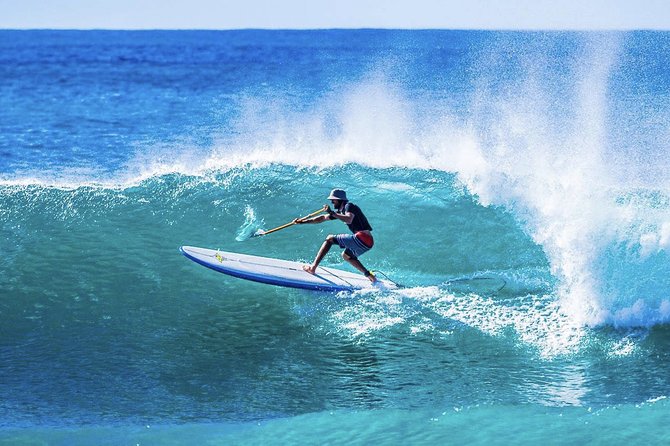
The instruction is not limited to simply standing upright. Duane has taught different ways to turn, helped people improve existing skills, and worked with participants who wanted to learn how to handle small waves. The exact amount of technique you cover will depend on your group and how quickly everyone becomes comfortable.
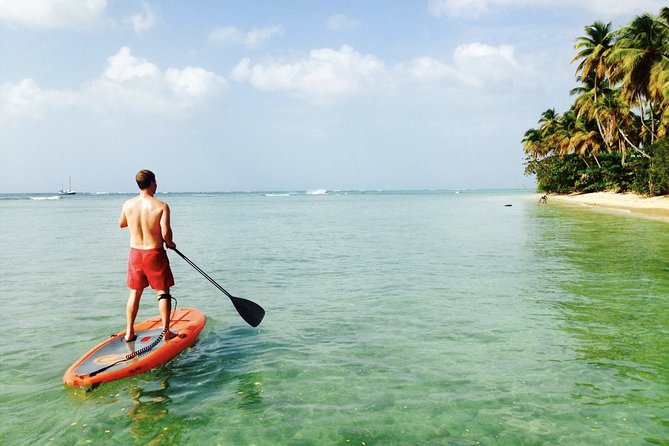
The setting can make a real difference. Pigeon Point includes sheltered water suitable for an introduction, but conditions are not fixed. Wind, tide, and waves change the feel of the session. One useful tip from the experience is to pay attention to tide levels, since lower water can leave coral closer to the surface if you fall.
That does not mean you should avoid the lesson. It means you should listen closely to the instructor and respect the conditions on the day. If you are nervous, tell Duane at the start. A private lesson gives him more room to adjust the pace and keep the first part manageable.
The short coastal paddle
Once you feel ready, you go for a short paddle along the coast. This is the reward for the practice session, and it gives you a taste of why stand-up paddling works so well in Tobago.
The coastal section may be relaxed, or it may include a little more movement if conditions allow. The supplied information does not promise a fixed route, wildlife sighting, or particular coastal stop for this one-hour lesson. You should think of it as a short guided paddle, not a guaranteed trip to Nylon Pool, No Man’s Land, or Petit Trou Lagoon.
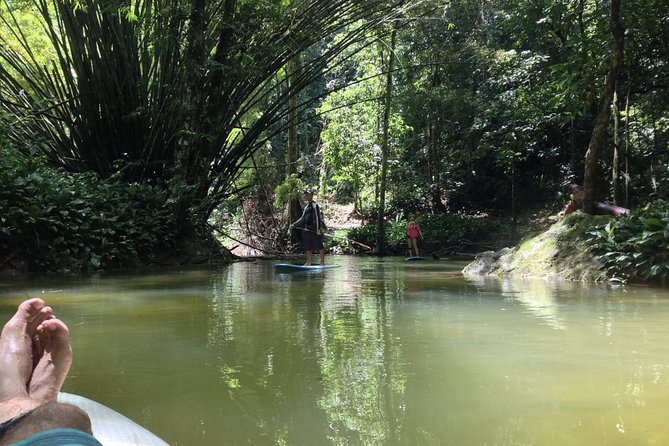
That distinction is important. Some outings with Stand Up Paddle Tobago have included longer journeys, lagoons, turtles, stingrays, birds, and other coastal areas. Those are separate types of experiences and should not be assumed here. The one-hour lesson focuses first on learning the sport, then on enjoying a brief paddle if you are comfortable.
Even a short outing can feel special. You are standing above the water, moving under your own effort, and seeing the coast from a lower, quieter viewpoint. For a beginner, the real achievement is often not distance. It is reaching the point where you stop thinking about every stroke and start enjoying the view.
Why Duane’s teaching matters for beginners
A board lesson succeeds or fails largely on instruction. Duane receives consistent praise for being patient, friendly, and attentive, especially with first-time paddlers and children.
That patience is valuable because beginners do not all learn at the same speed. One person may stand quickly, while another may prefer to remain on their knees for a while. In a private session, the instructor can spend more time with the person who needs it without holding back the rest of a large group.
The teaching also goes beyond basic balance. Duane explains techniques clearly, checks that people understand them, and talks about Tobago’s marine life and local environment as you paddle. His connection to the island adds a local layer to what could otherwise be a standard equipment lesson.
He has also worked with mixed groups. Families have brought children as young as seven and eight, and sessions have included older relatives alongside younger participants. That does not mean every child or adult will find the activity easy, but it does show that the lesson can suit different activity levels when everyone has moderate physical fitness.
Solo visitors are another good match. A private lesson can feel less awkward than joining a large group where everyone is watching one another struggle. You get direct coaching, and the relaxed atmosphere makes it easier to ask for help.
More classes and workshops in Tobago:
- Steel Pan Class
★ 4.0 · 5 reviews - Authentic Trinidadian Cooking Class in Port of Spain
★ 5.0 · 3 reviews
Family suitability and physical effort
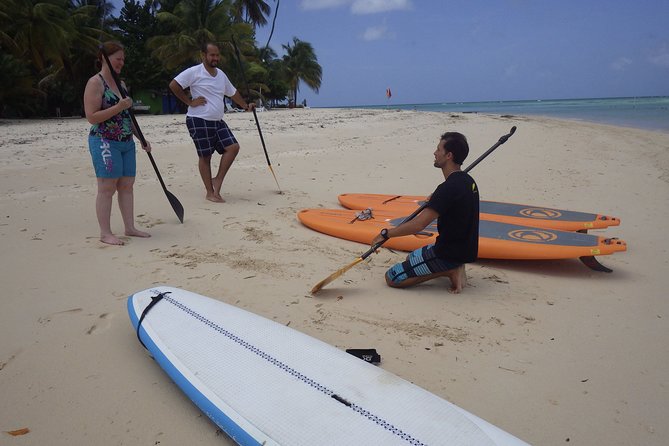
The activity is family-friendly in spirit, but you should still treat it as a physical outing. You need enough balance and stamina to kneel, stand, paddle, and recover from repeated attempts. The stated requirement is a moderate level of physical fitness.
Children have taken part successfully, including a seven-year-old and an eight-year-old, with Duane adapting his instruction. Parents should still judge their own child’s comfort around water and ability to follow directions. The information provided does not specify an age minimum, flotation equipment, or swimming requirement, so ask the operator directly if any of those details affect your decision.
You may get tired sooner than expected. Paddleboarding uses your legs, core, shoulders, and arms, especially when you are concentrating hard on balance. One person described the lesson as tiring afterward, though still well worth the effort.
Wear clothing suitable for getting wet and plan around the fact that falling is part of learning. The activity is not a dry sightseeing stop. If you want a completely effortless hour, choose a boat ride instead. If you like learning a new skill and laughing at a few wobbly moments, this is a better fit.
Wildlife, lagoons, and what not to expect
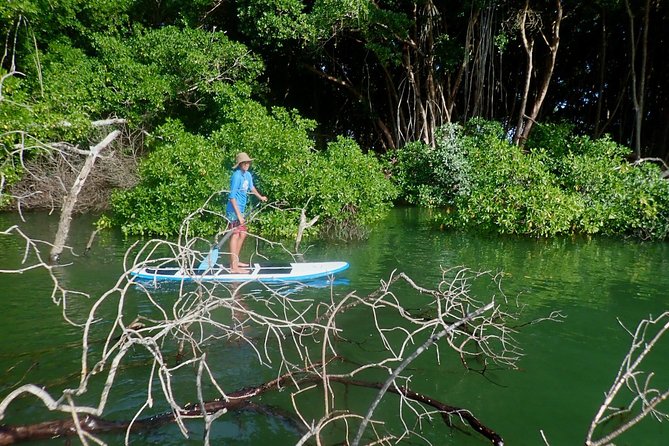
Tobago’s water can offer encounters with marine life, and longer outings connected with this operator have included turtles, stingrays, tarpon, anhingas, pelicans, and frigate birds. Participants have also enjoyed paddling through lagoons and learning more about the local ecosystem.
For this specific one-hour lesson, however, wildlife sightings are not guaranteed. The advertised plan is a land lesson, water practice, and a short coastal paddle if you feel ready. That is still worthwhile, but you should not book it solely in hope of seeing turtles or stingrays.
The environmental explanations are a welcome extra. Duane has been praised for caring about Tobago’s nature and for sharing information about the island. If you enjoy learning about the place as you move through it, his guidance adds value without turning the session into a formal lecture.
I would treat any wildlife sighting as a bonus. The dependable part is the instruction and the time on the water. That keeps expectations realistic and makes the experience more satisfying if the coast is quiet on your particular morning or afternoon.
Price, timing, and overall value
The price is $61.54 per person for about one hour. That is not the cheapest activity you can find in Tobago, but the value improves if you are starting from zero and want proper instruction rather than simply hiring equipment.
You are paying for a structured introduction, coaching on land and in the water, and the option of a short guided coastal paddle. The private format is especially useful for a couple, family, or small group that wants personal attention. A beginner who leaves able to stand, turn, and paddle with confidence may get more from this hour than from a longer but unguided rental.
The value is less clear for an experienced paddleboarder. If you already know how to balance, steer, and handle changing conditions, the lesson may feel brief. You might prefer to ask about a longer route or a dedicated lagoon or coastal tour.
The experience is commonly booked around 22 days ahead. That gives you a practical planning clue: it is worth reserving before your trip rather than assuming you can arrange it at the last moment, especially if your dates are fixed.
Confirmation arrives when you book, and the ticket is mobile. The activity ends back at the meeting point, which keeps the logistics straightforward. You can reach the start near public transportation, and you do not need to plan for a separate end location.
Weather and cancellation details
This is an outdoor water activity, so weather matters. If poor weather causes the session to be canceled, you are offered another date or a full refund.
You can cancel for a full refund if you do so at least 24 hours before the scheduled start time. Cancellations or changes made less than 24 hours before the start are not refunded or accepted, and the cut-off follows local Tobago time.
I would avoid placing this lesson at the tightest point in your holiday schedule. A little flexibility helps if weather interrupts the plan, and it also leaves room for delays getting to Pigeon Point.
How this compares with longer Tobago paddles
This lesson is an introduction, not a full coastal expedition. Some separate outings with the same provider have gone to Petit Trou Lagoon, No Man’s Land, and Nylon Pool, with longer time on the water and chances to see turtles or rays.
Those longer trips may be a better match if you already paddle or want the water excursion to be a major part of your day. The one-hour lesson is better if you have limited time, want to learn the basics, or are unsure whether stand-up paddling is for you.
I like this approach because it avoids asking beginners to commit to a demanding half-day outing. You can find out how your balance and confidence feel, then decide later if you want a longer paddle during your Tobago stay.
Who should book this lesson?
Book it if you are new to stand-up paddleboarding, want a calm and encouraging instructor, or are traveling with a small family group that needs flexible attention. It also suits solo visitors who prefer a private activity and want to learn without feeling rushed.
It is a strong choice for anyone who values local conversation and nature notes along with basic instruction. Duane’s easy manner has been a repeated strength, and his interest in Tobago gives the session more personality than a simple equipment handoff.
Think twice if you want a guaranteed wildlife tour, a long coastal route, or a full trip to Nylon Pool. Those goals call for a different, longer outing. Also reconsider if you have limited physical fitness or are uncomfortable with the possibility of falling into the water.
With a five-star rating from 37 published ratings and a 100 percent recommendation rate, the experience has a strong track record. The clearest reason to book is not the rating itself, though. It is the combination of a manageable one-hour format, patient coaching, and a beautiful chance to see if paddleboarding belongs in your Tobago plans.
FAQ
Where does the stand-up paddle lesson begin?
The lesson begins at Radical Sports Tobago on Pigeon Point Road in Tobago, Trinidad and Tobago.
Where does the activity end?
The activity ends back at the meeting point at Radical Sports Tobago.
How long does the lesson last?
The experience lasts approximately one hour.
How is the lesson organized?
You begin with a 20-minute lesson on land. You then practice those techniques in the water, followed by a short coastal paddle if you feel ready.
Is the activity private?
Yes. Only your group participates in this private activity.
Can I reach the meeting point by public transportation?
Yes. The meeting point is near public transportation.
What level of fitness is required?
Participants should have a moderate level of physical fitness.
What happens if bad weather cancels the activity?
If poor weather causes a cancellation, you can choose another date or receive a full refund. You can also cancel at least 24 hours before the start time for a full refund.
Recently added around Tobago
- Turtle Watching★ 3.5 · 3 reviews
- Partlatuvier Bay Day Trip with Lunch★ 4.5 · 3 reviews
- Full Day Group Tour in Tobago Atlantic Coast★ 3.0 · 3 reviews
- 2 Hours Trekking Waterfall Tour in Tobago★ 5.0 · 3 reviews
- Blue Mango Hole (Healing Hole)★ 5.0 · 3 reviews
- Castara Bay Day Trip with Lunch★ 5.0 · 3 reviews
- Englishman’s Bay Day Trip with Lunch★ 3.5 · 3 reviews
- Tobago: Buccoo Reef Marine Park Glass Bottom Boat Tour★ 3.1 · 3 reviews
Tobago Tours, compared.
The Grand Circle 12-Hour All-Inclusive Island Experience
Read our review →
Birdwatching, Waterfall, Rainforest and Island Nature Tours
Read our review →
Full Island Tour (Including Lunch & Snorkeling)
Read our review →
Tobago Buccoo Reef Glass Bottom Boat Cruise and Island Sightseeing Tour
Read our review →
VIP Inclusive Private Tour of Island (Lunch, Drinks + Snorkeling)
Read our review →Browse the lists this tour appears in